
Brake Fluid: The Service Job Most Drivers Have Never Had Done
It absorbs water, it loses its boiling point, and the MOT will never warn you about it
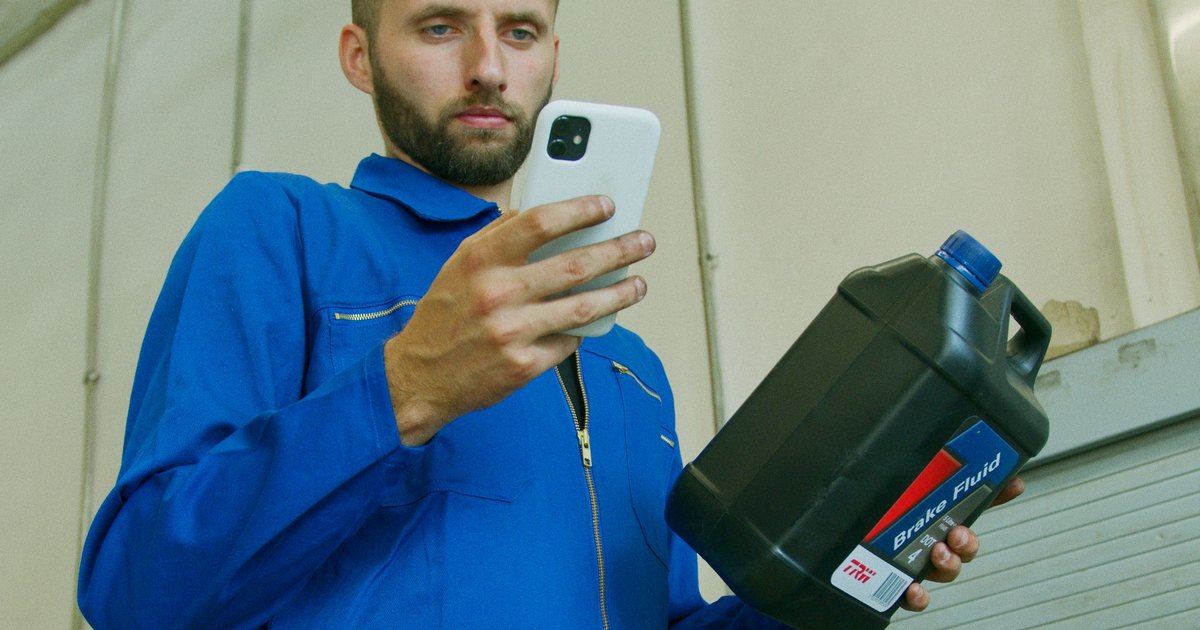
Ask most drivers when they last had their brake fluid changed and you will get the same answer: a pause, a shrug, and “I don’t think I ever have.” It is one of the most important fluids in your car, it is the only thing physically connecting your foot to the brakes, and it quietly degrades from the day it is put in — yet it is almost never on anyone’s radar.
At Dom’s Garage Services in Letchworth we see the consequences of neglected brake fluid regularly. Here is what it actually does, why it goes off, and how to tell whether yours is due.
What brake fluid actually does
Your brakes are a hydraulic system. When you press the pedal you are not pulling a cable or pushing a rod all the way to the wheels — you are pressurising a column of fluid that runs through steel pipes and flexible hoses to a caliper at each corner. That pressure squeezes the pads against the discs.
The whole thing works on one simple principle: liquids do not compress. Push on one end of a sealed column of fluid and the far end moves instantly and with enormous force. That is what turns modest pressure from your foot into enough clamping force to stop nearly two tonnes of car from motorway speed.
Gases, on the other hand, compress very easily indeed. And that is where the problem starts.
The problem: brake fluid drinks water out of the air
Brake fluid is hygroscopic, which is a technical way of saying it actively attracts and absorbs moisture. It pulls water vapour out of the atmosphere through the flexible rubber hoses, past seals, and through the reservoir cap every time the system breathes in and out with temperature changes.
You cannot stop it. It is a designed-in property, not a fault — fluid that absorbs stray moisture and holds it in suspension is far safer than fluid that lets water pool in the low points of the system and rust it from the inside. But it means the fluid has a working life, and that life is measured in years rather than miles.
A typical car’s brake fluid absorbs somewhere in the region of 2–3% water in its first couple of years on the road. That does not sound like much. It changes the fluid’s behaviour completely.
Dry boiling point versus wet boiling point
Brake fluid is graded by two figures. The dry boiling point is what it manages fresh out of a sealed bottle. The wet boiling point is what it manages once it has absorbed around 3.7% water — in other words, roughly what you can expect from fluid that has been in a car for a couple of years.
| Fluid specification | Minimum dry boiling point | Minimum wet boiling point |
|---|---|---|
| DOT 3 | 205°C | 140°C |
| DOT 4 | 230°C | 155°C |
| DOT 5.1 | 260°C | 180°C |
Look at the DOT 4 row, which is what most modern cars use. Old fluid loses around a third of its heat tolerance. And brakes get hot — genuinely, startlingly hot. A caliper working hard on a long descent or in heavy stop-start traffic can push well past 200°C, and that heat soaks straight into the fluid sitting inside it.
What happens when it boils
When brake fluid boils it turns to vapour, and vapour compresses. Press the pedal and instead of pressurising a solid column of liquid, you are squashing a pocket of gas.
The result is called vapour lock, and drivers who have experienced it never forget it. The pedal goes long, then soft, then in the worst cases drops most of the way to the floor with very little happening at the wheels. It arrives without warning, and it arrives at precisely the moment you are asking the most of the brakes — the bottom of a long hill, a heavily loaded car, towing, or an emergency stop after a hard run.
The cruel part is that it is temporary. Let everything cool and the pedal comes back, the car feels normal again, and it is very easy to convince yourself you imagined it. The fluid has not repaired itself. It will do exactly the same thing next time.
The slower, quieter damage
Even if you never boil your brake fluid, the water in it is doing something else: corroding the system from the inside out.
- Caliper pistons and slider pins seize, so pads wear unevenly and one corner of the car does more work than the others.
- Master cylinder and wheel cylinder bores pit and score, which chews through seals.
- The ABS modulator — an expensive assembly full of fine passages and precision valves — silts up and sticks. This is the one that really hurts, and it is a component almost nobody thinks of as being at risk from an unchanged fluid.
- Steel brake pipes corrode from within as well as from road salt outside.
Old fluid also darkens as it picks up moisture, copper from the pipes and general debris. Fresh fluid is a clear, light straw colour. If yours looks like cold tea, it has been in there a long time.
Why the MOT will never tell you
This is the crux of it, and it catches out sensible, conscientious owners every year.
The MOT checks that your brakes work. It measures braking efficiency on rollers, it checks for leaks, it checks the fluid level, and it inspects pipes, hoses, discs and pads. What it does not do — because there is no practical way to do it as part of the test — is measure the moisture content or boiling point of the fluid itself.
So a car can sail through its MOT with a clean sheet while carrying four-year-old fluid that will fade badly the first time it is asked to work hard. A pass certificate is not a statement that your brake fluid is healthy. It never has been.
How often should it be changed?
The near-universal manufacturer recommendation is every two years, regardless of mileage. A handful of makes specify three, and a few performance models want it annually. Your handbook is the authority for your particular car, and we will always check it.
Note the phrase regardless of mileage. This is a time-based job, not a distance-based one. The fluid in a car that covers 3,000 gentle miles a year is absorbing moisture at very much the same rate as one that covers 20,000. Low-mileage owners are, if anything, the most likely to be running old fluid — because they reach the two-year mark long before they reach a mileage-based service interval.
The signs your fluid is overdue
- A pedal that feels soft, spongy or “long” compared with how it used to feel.
- Brakes that fade noticeably on a long downhill run or after repeated hard stops.
- The pedal sinking slowly towards the floor when you hold steady pressure at a red light.
- Dark, murky fluid in the reservoir instead of a clear straw colour.
- A brake warning light — though by this point you should be booking in immediately, not reading blog posts.
- Simply not being able to remember it ever being done.
That last one is the most common by a distance, and it is a perfectly good reason on its own.
What we do
A proper brake fluid change is not a matter of siphoning out the reservoir and topping it up — that only ever swaps the small amount of fluid sitting at the top, and leaves the old, wet, hot-running fluid exactly where it does the damage, down in the calipers.
At Dom’s we test the fluid first so you can see the state of what is in there, then bleed the entire system through until clean, correct-specification fluid is coming out of every corner, working in the right sequence and keeping the reservoir topped up throughout so no air is drawn in. On cars with ABS or electronic stability control we use diagnostic equipment to cycle the pump where the manufacturer requires it, so the fluid trapped inside the modulator is replaced too rather than being left behind.
We use the exact specification your car calls for. Brake fluids are not interchangeable — putting the wrong grade in can affect both performance and the seals themselves.
Frequently asked questions
Can I just top the reservoir up myself?
Topping up is fine in an emergency, but be aware of two things. First, it does not address old fluid lower down the system. Second, and more importantly, a dropping brake fluid level usually means one of two things: your pads have worn down (so the pistons sit further out and the fluid has gone to fill the gap), or you have a leak. Both need looking at. A brake system does not consume fluid.
Does it matter if the car is barely driven?
It matters more, not less. Moisture absorption is driven by time and humidity, not miles. A car that has sat on a driveway for four years has thoroughly wet brake fluid and often seized calipers to go with it.
Will a fluid change fix a spongy pedal?
Often, yes — particularly if the sponginess comes from air or boiled fluid in the system. But a soft pedal can also mean a failing master cylinder, a swollen flexible hose, or a leak, so it is worth having it properly diagnosed rather than assumed.
How long does it take?
It is a straightforward job and normally done comfortably within a morning. It pairs naturally with a service, an MOT or brake work, since the car is already up on the ramp.
Is DOT 5.1 an upgrade on DOT 4?
It has a higher boiling point and the two are compatible, but you should always use what the manufacturer specifies. DOT 5 (without the .1) is a completely different silicone-based fluid and must never be mixed with either.
Book a brake fluid change in Letchworth
If you cannot remember your brake fluid ever being changed, it is due. We will test it, tell you honestly what condition it is in, and change it properly if it needs it.
Find us at 11 Protea Way, Letchworth, SG6 1JT. Book online in a couple of minutes or call the workshop and talk it through with our team — we will always explain exactly what your car needs before any work is carried out.