
Coolant Isn’t Just Water — and Ignoring It Can Cost You an Engine
What antifreeze really does, why topping up with tap water is a false economy, and what to do the moment the temperature gauge climbs
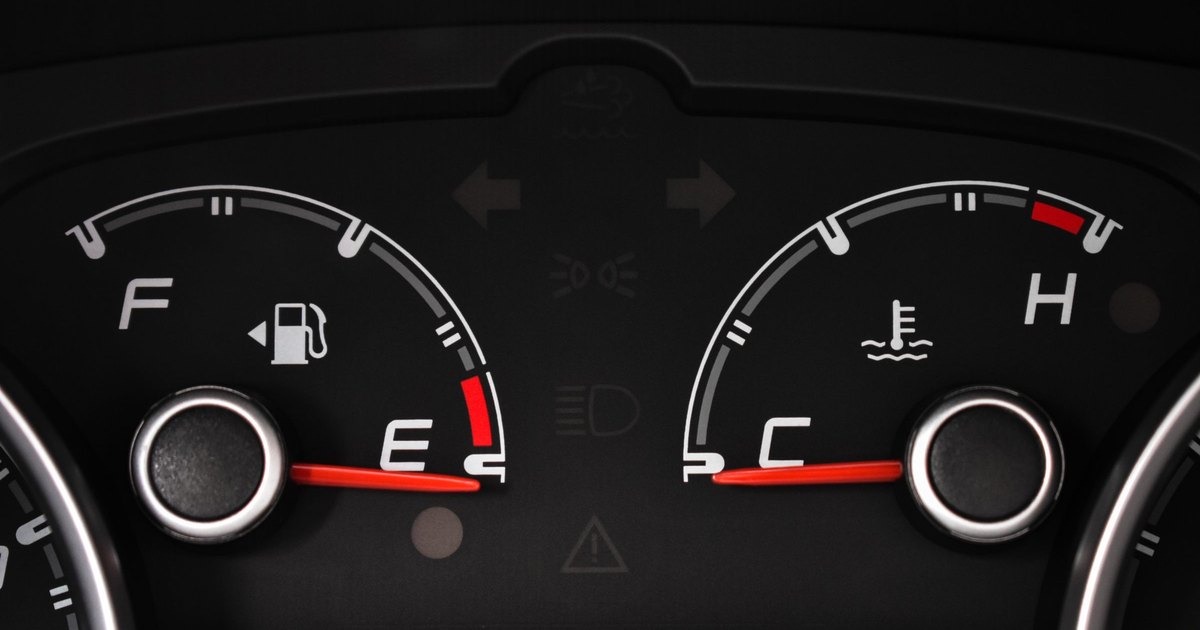
Coolant is the fluid everyone knows about and almost nobody thinks about. It sits in a translucent tank under the bonnet, it is usually a cheerful pink, blue or orange, and as long as the level is somewhere between the two marks most drivers give it no further thought for years.
That is understandable, and it is also how a routine maintenance job turns into an engine rebuild. Here is what coolant actually does, why it wears out, and what to do the moment your temperature gauge starts climbing.
Coolant has three jobs, and only one of them is obvious
1. It moves heat
Your engine converts a remarkable amount of fuel into heat rather than motion. Coolant is pumped continuously around the block and cylinder head, absorbs that heat, and carries it to the radiator where the airflow sheds it. It also runs through the heater matrix behind your dashboard, which is why the cabin heater is really just a small second radiator pointed at you.
2. It stops freezing — and raises the boiling point
This is the job it is named after. Antifreeze stops the coolant turning to ice on a cold night, which matters enormously because water expands as it freezes and can crack an engine block outright.
Less well known is that it works at the other end too. A properly mixed and pressurised coolant system boils at a considerably higher temperature than plain water would, which gives the engine a much wider safety margin on a hot day sitting in traffic.
3. It stops the engine corroding from the inside
This is the forgotten job, and it is the one that fails first.
The inside of a cooling system is a mixed-metal environment — aluminium head and block, steel components, copper or brass in places, rubber hoses, plastic housings, and various gaskets and seals. Left to itself with water running through it, that combination corrodes enthusiastically.
Coolant contains a package of corrosion inhibitors that coat those internal surfaces and protect them. Those additives are consumed over time. They do not last for ever, and when they are gone the coolant is still doing jobs one and two while quietly failing at job three.
Why old coolant becomes actively harmful
As the inhibitors deplete, the coolant’s pH drifts and it gradually turns acidic. At that point it stops protecting the system and starts attacking it:
- The water pump seal is usually the first casualty, which leads to a weeping pump and eventually a failed one.
- Aluminium surfaces in the head and block pit and corrode.
- The radiator and heater matrix silt up internally, so heat transfer drops and the car starts running warmer for no visible reason.
- Head gaskets corrode at their sealing faces — an unglamorous start to a very expensive problem.
- Thermostats stick, usually closed, which is the fastest route to an overheat.
You can often see it in the expansion tank. Fresh coolant is bright and clear. Old coolant goes dull, muddy, brown or rusty-looking, and you may see sediment or oily film in the tank. If yours looks like that, the fluid has stopped protecting your engine some time ago.
Why topping up with tap water is a false economy
It is a tempting shortcut on a driveway on a Sunday, and it does real damage.
- It dilutes the antifreeze and the inhibitor package. Enough top-ups and you have a system with very little corrosion protection and a much higher freezing point than the label on the bottle suggests.
- Tap water contains dissolved minerals. Hertfordshire has notably hard water. Those minerals precipitate out inside a hot engine as scale, exactly as they do in a kettle — but here they line the narrow coolant passages in the cylinder head and the fine tubes in the radiator, insulating the very surfaces that need to shed heat.
- It lowers the boiling point, reducing your margin on a hot day.
If you genuinely have to top up in an emergency, water is better than running the engine dry — but treat it as a get-you-home measure and have the system properly checked and corrected afterwards. And if you find yourself topping up regularly, the real problem is not the level. It is wherever the coolant is going.
You cannot just add “any colour”
Coolants are not interchangeable, and colour is a marketing choice rather than a reliable standard. The meaningful difference is the chemistry of the inhibitor package.
| Type | Roughly | Notes |
|---|---|---|
| IAT (inorganic) | Older vehicles | Traditional blue or green. Short life, typically two years. |
| OAT (organic acid) | Most modern cars | Long-life. Often red, orange or pink — but do not rely on colour. |
| HOAT / Si-OAT and others | Many European makes | Hybrid chemistries, frequently manufacturer-specific. |
Mix incompatible types and the additive packages can react, drop out of solution and form a gel or sludge that blocks the radiator and heater matrix. We have seen systems that needed stripping and flushing purely because two perfectly good coolants were put in the same car.
The rule is simple: use what the manufacturer specifies for your engine. If you do not know what is in there, the safe answer is to drain, flush and refill with the correct fluid rather than guess.
The warning signs, in the order you will notice them
- The temperature gauge creeping above its normal position, particularly in traffic or on a climb. Learn where your needle usually sits — that is the whole point of the gauge.
- The heater blowing cold, or only getting warm when you are moving. Often the first symptom of a low level or an air lock, because the heater matrix is usually the highest point in the system.
- A sweet, syrupy smell after a drive. That is coolant, and it means it is escaping somewhere.
- A level that keeps dropping with no puddle on the drive. Coolant is not consumed. If it is going somewhere with nothing visible underneath, it may be going into the engine.
- White smoke from the exhaust that smells sweet and does not clear once warm — different from ordinary condensation on a cold morning.
- A creamy, mayonnaise-like deposit under the oil filler cap or on the dipstick. Take this seriously.
- Bubbles in the expansion tank with the engine running and warm.
- The coolant warning light. By this point, stop.
What to do if it overheats — right now
This part is worth reading before you need it.
- Turn the cabin heater on full, with the fan on maximum. It feels wrong on a hot day, but the heater matrix is a radiator and it will pull real heat out of the engine.
- Get off the road safely and switch the engine off. Do not try to press on to somewhere more convenient.
- Do not open the expansion tank cap. A hot cooling system is pressurised, and releasing that pressure causes the superheated coolant to flash to steam and erupt out of the filler. It causes severe scalding injuries every year. Wait until the engine is properly cool — that means an hour or more, not five minutes.
- Do not pour cold water into a hot engine. The thermal shock can crack a cylinder head.
- Do not keep driving it. This is the important one. A car that has overheated once and been stopped promptly is very often fine. The same car driven another ten miles “just to get home” frequently is not.
- Call us, or call recovery. A tow is cheaper than a cylinder head every single time.
Why this is worth staying ahead of
The reason we bang on about coolant is the gap between the two outcomes.
On one side: a routine drain, flush and refill, done as part of a service, with clean fluid and full corrosion protection for years afterwards. Straightforward, planned, over in a morning.
On the other: a failed head gasket. That means the head coming off, machining to check it has not warped, a gasket set, and often a full strip and clean of a cooling system that is now full of oil and combustion gases. If the engine was driven hot for any length of time, it can mean an engine that is simply not economically repairable — which on an otherwise perfectly good car often means the end of the car.
The difference between those two outcomes is usually nothing more than a fluid nobody looked at.
Frequently asked questions
How often should coolant be changed?
It varies widely — older cars are often two years, many modern long-life coolants are quoted at five years or a substantial mileage, and some manufacturers claim lifetime fill. We would treat “lifetime” with healthy scepticism on a car that has already done a decade. Your handbook is the starting point, and testing the fluid tells you what is really going on.
Can coolant be tested?
Yes, and it is quick. We can check both the freezing protection and the condition of the fluid, so the decision to change it is based on evidence rather than a guess. It is a sensible thing to have done as part of a winter check.
What is the difference between a top-up and a flush?
A top-up adds fluid to bring the level up. A drain, flush and refill removes the old fluid, cleans the system out, and refills it with the correct specification — then bleeds the air out properly, which on modern engines with complex coolant routing is a job in itself. Air trapped in the system causes hot spots and is a common cause of “it overheats but the level is fine”.
My level drops slowly but I can’t see a leak. Is that normal?
No. Small external leaks often evaporate off a hot engine before they drip, so nothing appears on the driveway. The alternative — coolant disappearing internally — is considerably more serious. Either way it is worth a pressure test to find out which.
Is a coolant flush worth doing on an older car?
Usually yes, and the older the car the more likely the fluid is long past its useful life. On a very neglected system we will always talk you through what we find first, because occasionally a badly corroded system is being partly held together by its own sludge.
Cooling system checks in Letchworth
If your temperature gauge is behaving oddly, your heater has gone cold, your coolant looks murky or you simply cannot remember it ever being changed, book it in. We will test the fluid, pressure-test the system for leaks and give you a straight answer about what it needs.
Dom’s Garage Services, 11 Protea Way, Letchworth, SG6 1JT. Book online or call the workshop — and if you are overheating right now, stop the car, let it cool, and ring us.