
Grinding When You Brake but the Pads Are Fine? The Other Causes
Worn pads are the usual suspect, but not the only one, and some of the causes are not brakes at all
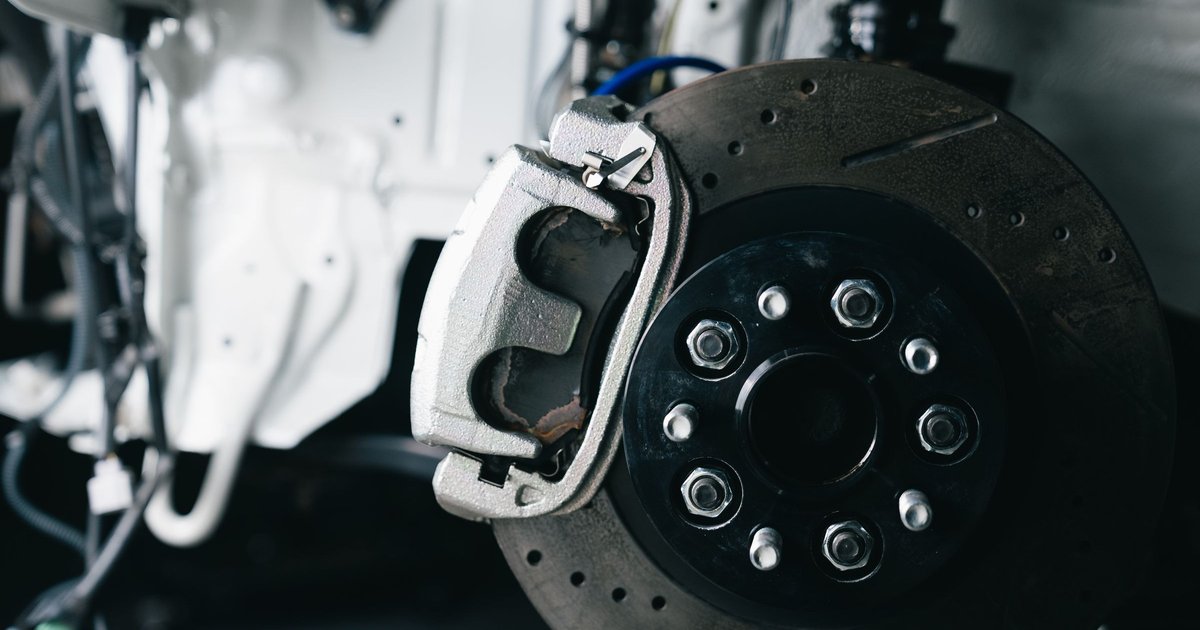
You hear a grinding noise when you brake, so you have the pads looked at, or look yourself, and there is plenty of friction material left. So what is making the noise?
It happens more often than you would think. Worn pads are the most common cause of grinding brakes, but they are far from the only one, and some of the others are not brakes at all. This is what we look for when a car comes into the workshop grinding but the pads look fine.
First: "the pads look fine" from where?
Before anything else, it is worth asking which pads were checked, and how.
- The inner pad can be worn out when the outer one looks new. Through the spokes of a wheel you can only see the outer pad. If the caliper’s slider pins are sticking, the inner pad does all the work and can wear down to its metal backing plate while the outer pad still looks thick. This is one of the most common reasons we find for "grinding but the pads are fine".
- The rear brakes get forgotten. Most checks start at the front, because the front brakes do most of the work. But rear pads, and on some cars rear brake shoes inside a drum, wear out too. On many modern cars the rear brakes also have an electric parking brake motor that can hold the pads on slightly if it is faulty.
- Pads can be thick and still be the problem. A pad that has started to break up, has a cracked friction surface or has come away from its backing plate can grind with plenty of material left.
The other causes of grinding when you brake
A stone caught between the disc and the dust shield
Behind each brake disc there is a thin metal shield. A small stone or piece of grit can get trapped in the gap between that shield and the disc, and it makes a grinding or scraping noise that often comes and goes, and sometimes carries on even when you are not braking. It is common after driving on gravel, farm tracks or freshly dressed roads. Sometimes it works itself loose; sometimes it scores a groove into the disc before it does.
A bent dust shield
The same shield can get knocked by a kerb, a jack or a careless tyre change and end up touching the disc. That gives a constant light scrape or grind which changes as you brake and turn.
Rust on the discs
If the car has stood for a few days, especially in wet weather, a film of rust forms on the discs. The first few stops make a grinding or rumbling noise as the pads scrape it off. That is normal and should disappear within a mile or so. If it does not, or if the car has stood for weeks and the discs are badly pitted, they may need replacing.
A lip on the edge of a worn disc
As discs wear, a ridge builds up around the outer edge where the pad does not reach. When new pads are fitted to worn discs, the pad can catch on that lip and grind, particularly in the first few hundred miles. This is one reason we measure the discs whenever we change pads, rather than just bolting new pads in.
A sticking or seized caliper
A caliper that does not release fully keeps the pad pressed lightly against the disc. You may notice a grinding or rubbing noise, a burning smell after a drive, one wheel much hotter than the others, or the car pulling to one side. Left alone it wears the pads and disc on that wheel unevenly and quickly.
A worn wheel bearing
Not a brake fault at all, but often mistaken for one. A wheel bearing usually makes a grinding, rumbling or droning noise that gets louder with speed and changes when you go round a bend, as the weight shifts onto or off the bad bearing. If the noise changes with cornering more than with braking, suspect the bearing.
The wrong pads, or pads that have not bedded in
Some cheap pads contain harder materials that are noisy against the disc, and any new pad needs a few dozen gentle stops to bed in. A light grind in the first days after a brake job is not unusual. A heavy one is, and should go straight back to whoever fitted them.
Is there a temporary fix for grinding brakes?
Not a safe one. If the cause is a stone in the dust shield, a few gentle reverse-and-forward manoeuvres at low speed will sometimes dislodge it. That is about the limit of what you can sensibly do at the roadside.
If the grinding is metal on metal (a pad worn to its backing plate, a seized caliper, a disc breaking up), the car is not safe to drive any distance. Every stop is wearing away the disc and reducing how well the car stops. Do not spray anything onto the brakes either. Lubricants and cleaners in the wrong place can contaminate the pads and make the car stop worse, not better.
How to describe the noise
When you book the car in, a few details save a lot of time:
- Does it happen every time you brake, only on the first few stops, or randomly?
- Does it carry on when you are not touching the brake pedal?
- Does it change when you turn left or right?
- Does it seem to come from the front or the back, and from one side?
- Has anything been done to the brakes or wheels recently?
How we find it
We put the car on the ramp and take the wheels off, so we can see both pads on each brake, the discs on both faces, the calipers and their slider pins, the dust shields and the rear brakes. We spin each wheel by hand to feel for a rough bearing, and if the noise only shows on the road, we take it for a drive with you or on our own.
Then we tell you what is causing it and what needs doing. Very often it is something small, a stone or a bent shield, and we will tell you that too.
Frequently asked questions
Why do my brakes grind when I first set off in the morning?
Usually surface rust on the discs from overnight damp. If it stops after the first few stops it is nothing to worry about.
My brakes grind but only when I am not braking. What is that?
Most likely a stone or a bent dust shield touching the disc, a caliper that is not releasing, or a wheel bearing. All are worth getting checked, and the bearing and caliper should not be left.
Will grinding brakes fail the MOT?
The noise itself is not tested, but the causes often are. Pads worn below the minimum, badly worn or damaged discs, a seized caliper and uneven braking are all MOT failures.
How long can I drive with grinding brakes?
If it is metal on metal, as little as possible. The disc will be getting damaged with every stop, and the job gets more expensive the longer it is left.
Brake checks in Letchworth
We have written before about the common causes of grinding brakes and what pads and discs cost. If yours are grinding and nobody can see why, book a brake check and we will get the wheels off and find out.
Dom’s Garage Services, 11 Protea Way, Letchworth Garden City, SG6 1JT. Book online or call the workshop on 01462 671753.