
Short Journeys Are Killing Your Diesel: DPF and AdBlue Explained
Why school runs and short commutes block a diesel particulate filter, and what the AdBlue countdown really means
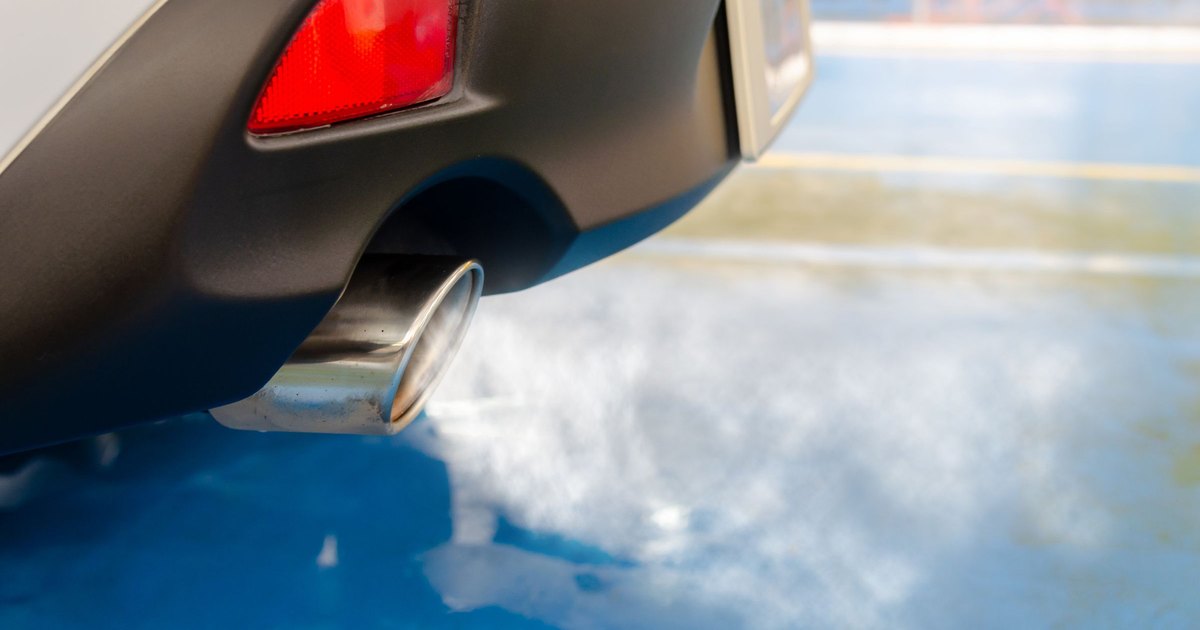
If you run a diesel and your driving is mostly the school run, a short hop to the station and the occasional trip into town, your car is being used in the way its emissions system likes least. Modern diesels are superb long-distance vehicles. Used exclusively for short, cold, stop-start journeys, they will eventually protest — and the two systems that protest loudest are the DPF and the AdBlue/SCR system.
They are frequently confused with one another. They are entirely separate, they fail in different ways, and understanding the difference can save you a very large bill.
What a DPF is and why your car has one
DPF stands for Diesel Particulate Filter. It sits in the exhaust and its job is to trap the fine soot particles that diesel combustion produces before they leave the tailpipe. These are the particulates linked to respiratory illness, and the filter removes the overwhelming majority of them. They have been fitted as standard across the industry since around 2009, and on many cars before that.
The filter works like a honeycomb of tiny blocked channels. Exhaust gas is forced through porous walls, the gas gets out, the soot does not. Which raises the obvious question: if it keeps trapping soot, what stops it filling up?
Regeneration: how the filter cleans itself
The answer is that it burns the soot off. Soot ignites at high temperature and turns into a tiny quantity of ash. This process is called regeneration, and it happens in two ways.
Passive regeneration
On a long run at sustained speed, the exhaust is naturally hot enough — comfortably over 350°C — for the trapped soot to burn away continuously. The driver notices nothing at all. This is the system working exactly as intended, and it is why a diesel that does regular motorway miles will often go its whole life without a single DPF problem.
Active regeneration
When the car is not getting hot enough on its own, the ECU intervenes. Once the sensors report that the filter is around 45% full, the engine deliberately injects extra fuel late in the combustion cycle to raise exhaust temperature to roughly 600°C and burn the soot off. This takes somewhere in the region of ten to twenty minutes of continuous driving.
You may notice it happening: the cooling fan running hard, a slightly rougher idle, a faint hot smell, the stop-start system refusing to work, and a noticeable drop in fuel economy for the duration.
Why short journeys break the cycle
Here is the problem in one sentence: an active regeneration that is interrupted does not just fail — it makes things worse.
Picture a typical week. Ten minutes to school, engine barely warm. Ten minutes back. Fifteen minutes to the shops. The car requests a regeneration, gets three or four minutes into it, and you park up and switch off. It tries again the next journey. Same result. Each attempt adds fuel and gains no ground, while the soot load keeps climbing.
Two things then happen.
First, the filter gets progressively fuller until the car gives up trying to regenerate on its own, turns on the DPF light and eventually drops into limp mode to protect itself.
Second — and this is the one that catches people out — the extra fuel injected during those failed regenerations washes past the piston rings and down into the sump. Your engine oil level rises, the oil is diluted with diesel, and diluted oil lubricates poorly. In extreme cases the engine can begin to run on its own sump oil, which it cannot then be switched off from. If you check your dipstick and the level is above maximum on a diesel you have not topped up, take it seriously and get it looked at.
What the warning lights are telling you
There is a rough order of escalation, and where you catch it makes an enormous difference to what it costs to put right.
| What you see | What it means | What to do |
|---|---|---|
| DPF light on, car otherwise normal | Filter is loading up and the car has not been able to complete a regeneration | Take it for a proper drive — see below. Often clears itself. |
| DPF light plus engine management light | The car has stopped attempting to regenerate on its own | Book it in. Driving further is unlikely to help now. |
| Reduced power / limp mode | The filter is heavily blocked and the engine is protecting itself | Get it seen promptly. Forced regeneration may still work. |
| Oil level above maximum, diesel smell to the oil | Fuel dilution from repeated failed regenerations | Stop driving it and call us. This one can damage the engine. |
The drive that clears a DPF light
If you have caught it at the first stage, you can very often fix it yourself for the price of some fuel. The aim is to give the car a sustained period at high enough load and temperature to complete a regeneration.
- Get the engine fully up to temperature first — not just the gauge lifting off cold.
- Find a dual carriageway or a decent A-road and hold a steady speed of around 40–60 mph.
- Use a lower gear than you normally would so the engine sits at higher revs — somewhere around 2,000–2,500 rpm rather than lugging along at 1,300.
- Keep going for at least 20 minutes without stopping. Around Letchworth, a run out along the A1(M) does the job nicely.
- Do not switch the engine off the moment the light goes out — if a regeneration is still finishing, let it.
If the light does not clear after two decent attempts, stop trying and book it in. Continuing to drive a car that cannot regenerate simply adds soot and dilutes the oil further.
When it is past the point of a drive
We work through it in stages, cheapest and least invasive first.
Diagnosis first. A blocked DPF is very often a symptom rather than the root cause. A leaking injector, a failed glow plug, a sticking EGR valve, a faulty differential pressure sensor or a split turbo hose will all stop regeneration working properly. Replacing the filter without finding out why it blocked simply buys you a repeat performance a year later, so we read the live data — soot load, differential pressure, exhaust temperatures — before touching anything.
Forced regeneration. If the filter is loaded but not saturated, we can command a regeneration through the diagnostic equipment under controlled conditions in the workshop, holding the engine exactly where it needs to be for as long as it takes.
Cleaning. Beyond a certain soot load the car will refuse to attempt a forced regeneration at all, because doing so risks a thermal runaway that melts the filter substrate. At that point the filter is cleaned — either on the car with proper equipment, or removed and cleaned off the vehicle.
Replacement. The last resort, and the expensive one. Filters also accumulate ash — the incombustible residue left behind after every regeneration and from oil additives — which cannot be burnt off and slowly fills the filter over its life. A DPF full of ash rather than soot has simply reached the end of its service life.
A word on DPF removal
You will find people who will cut the filter out and remap the software. It is worth being extremely clear about this.
- Since February 2014 the MOT has included a visual check for the presence of a DPF. Missing filter, automatic failure.
- It is an offence to use a vehicle on the road that has been modified so it no longer meets the emissions standard it was type-approved to.
- It invalidates your insurance as an undeclared modification, and it will show up on any competent pre-purchase inspection when you come to sell.
We do not remove them. Nobody reputable does.
AdBlue is a completely different system
If your diesel is roughly 2015-on and Euro 6, it very likely has an SCR — Selective Catalytic Reduction — system as well, and that is what AdBlue feeds.
AdBlue is not a fuel additive and it does not go anywhere near your fuel tank. It is a precisely mixed solution of urea and de-ionised water, held in its own separate tank with its own filler, usually next to the fuel filler or in the boot. It is injected into the hot exhaust stream, where it breaks down into ammonia and reacts with nitrogen oxides — the NOx that causes the air-quality problems diesels are criticised for — converting them into harmless nitrogen and water vapour.
It is consumed as you drive, at very roughly one litre per 600 miles depending on the car and how it is driven, so it needs topping up between services on higher-mileage vehicles.
The countdown is not a suggestion
Because the car is not legally permitted to run without functioning emissions control, the AdBlue warning is unusually firm. It typically starts at around 1,500 miles remaining with a message and a light. As the level falls the warnings escalate, and eventually you get a mileage countdown telling you exactly how far you have left. When it reaches zero, the car will start that journey but will not restart once you switch it off.
This is designed behaviour, not a fault. It catches people out badly, usually a long way from home.
Common AdBlue problems
- Crystallisation. AdBlue crystallises when it dries out, and the crystals block the injector nozzle and lines. Wiping up spills promptly and not leaving the system to sit empty helps.
- Freezing. It freezes at about −11°C. The car has heaters for the tank and lines, but those heaters can fail — which usually shows up on the first genuinely cold morning of the year.
- Poor quality or contaminated fluid. Only ever use fluid meeting the ISO 22241 standard. Never top up with water, screenwash or anything else — it will contaminate the tank and the repair is not cheap.
- NOx sensor failure. These live in a hot, filthy environment and are a recognised wear item. A failed sensor will throw a warning even when the AdBlue level is perfectly fine.
- Pump and level sensor faults. Common enough on higher-mileage cars.
If a warning appears when your tank is full, do not simply add more fluid — get the fault codes read. Adding AdBlue to a full tank will not clear a sensor fault and you will be back where you started.
Looking after both systems
- Give the car a proper run regularly. Twenty to thirty minutes of sustained driving every couple of weeks does more for a diesel’s emissions system than anything else on this list.
- Use the right oil. Cars with a DPF need low-SAPS oil to the manufacturer’s specification. The wrong oil produces far more ash and shortens the filter’s life significantly. This is not somewhere to economise.
- Service it on schedule. A clogged air filter, a tired fuel filter or a sticking EGR valve all push soot production up.
- Do not ignore a small warning. Almost every expensive DPF job we see started as a light somebody drove around with for a month.
- Be honest about whether a diesel suits you. If you genuinely never do a journey over fifteen minutes, a petrol or hybrid is likely to be a better fit next time.
Diesel diagnostics in Letchworth
If you have a DPF light, an AdBlue warning, a countdown you are keeping an eye on or a car that has dropped into limp mode, come and see us at Dom’s Garage Services. We will read the live data properly, find out why it has happened rather than just clearing the code, and tell you honestly what it needs.
11 Protea Way, Letchworth, SG6 1JT. Book online or call the workshop.